When researching in the 1800s, you inevitably come across the issue of trying to find out the maiden name and parents of your women ancestors. It’s just a fact of genealogy that it wasn’t well recorded for a very long time. When you can find any glimpse of information, it’s so exciting. There are tons of work arounds and tricks you can use to determine the name but nothing beats something that gives you the information without having to spend years finding it… I mean, that’s fun too, I won’t lie to you.
Baptism and Christening Records
Of the types of records where I would tell you to look for a mother’s maiden name. Baptism records usually would be very low on the list for the early 1800s.
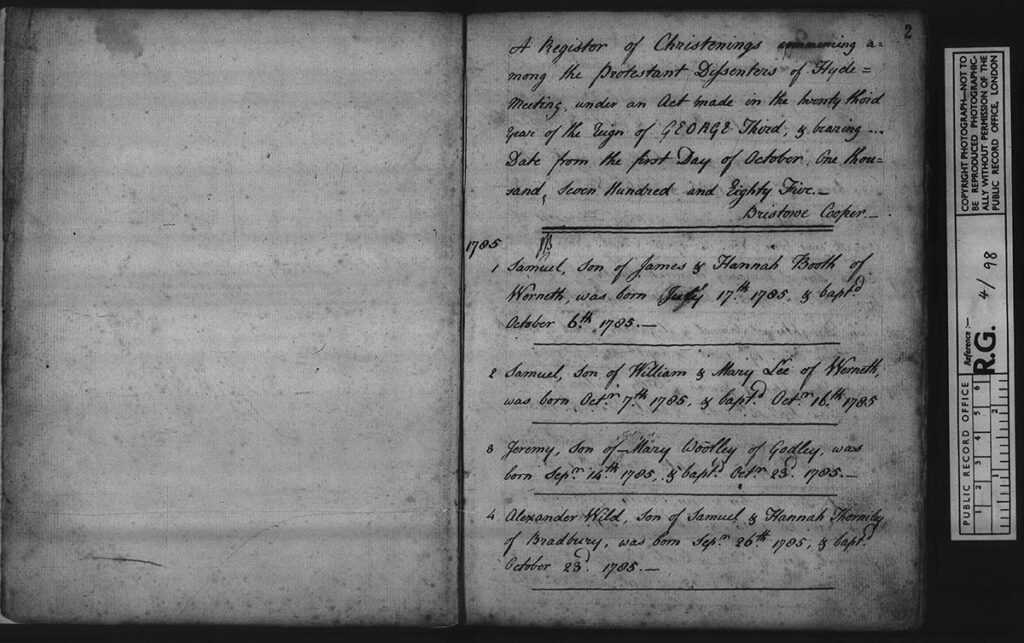
The above image is from the Hyde Chapel parish records on FamilySearch.org. This group of images spans from 1705-1838. It contains mostly births and baptisms. It’s wonderfully legible, gives the first name of both parents and the date of birth, which wasn’t always given in English baptism records. The image above shows Reverand Bristowe Cooper is the clergy member who is keeping record of the baptisms in 1785.
“A Register of Christenings commencing among the Protestant Dissenters of Hyde Meeting, under an Act made in the twenty third year of the reign of GEORGE Third, & bearing… Date from the first Day of October, One thousand, Seven Hundred and Eighty Five._
Bristowe Cooper._”
February the 1st, 1805
I start with Reverand Cooper because without his meticulous record keeping, I’m not sure I would have had the fortitude to page through every. single. page. of these records. Yes, every single page. For 20 years, Reverand Bristowe Cooper kept beautiful records.
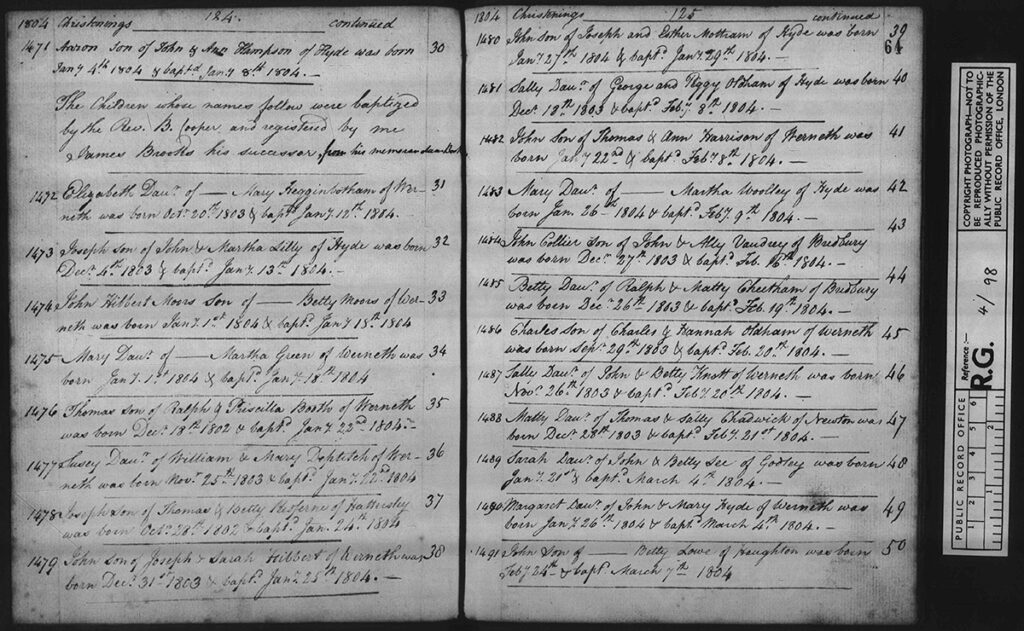
On February 1, 1805, Rev. Cooper passed away after a lingering illness. His successor, Rev. James Brooks, finished recording the last baptisms for his predecessor. For about one year after Rev. Cooper’s death other clergy members filled in at the church and Rev. James Brooks made note of that also. If I hadn’t been paging through one page at a time, I don’t think I would have even noticed these events unfolding until Rev. Brooks next decision.
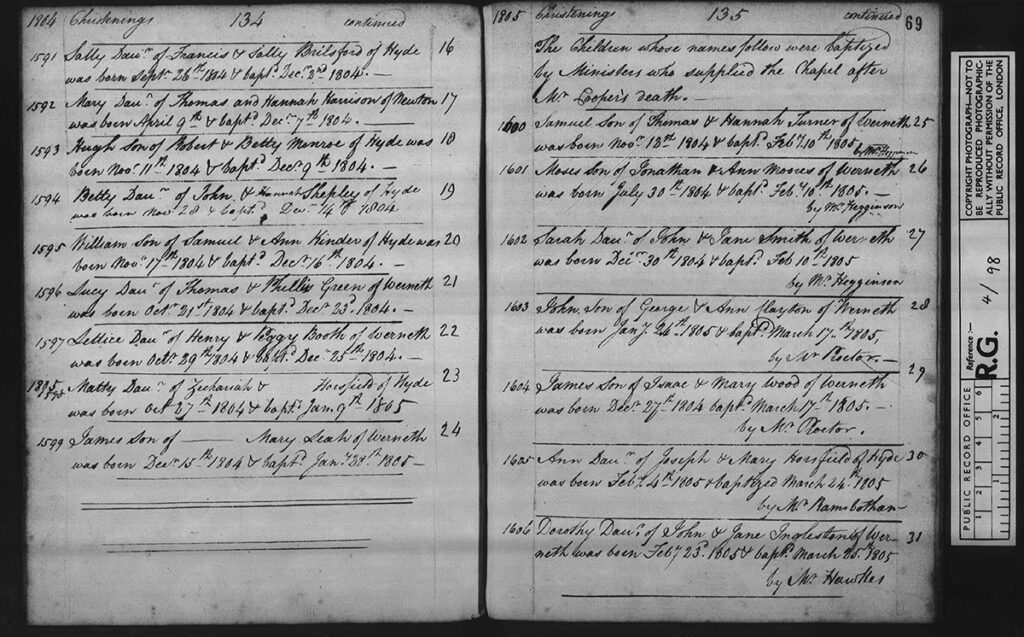
January 1806
It’s obvious once you see how organized the baptisms are after a change of clergy that they were tracking the baptisms elsewhere and this was the final product. After so many years of having these kind of records jump around in dates and not keep any kind of order, it’s really so refreshing. Anyway, the fact that this is information transcribed from another source is important to note because it means there is chances for errors when the transcriptions were being made. This comes in handy to know when I found a small error in the baptism record for one of my ancestors in this record set.
In January of 1806, Rev. Brooks marks down that he has taken over the baptisms for the parish.
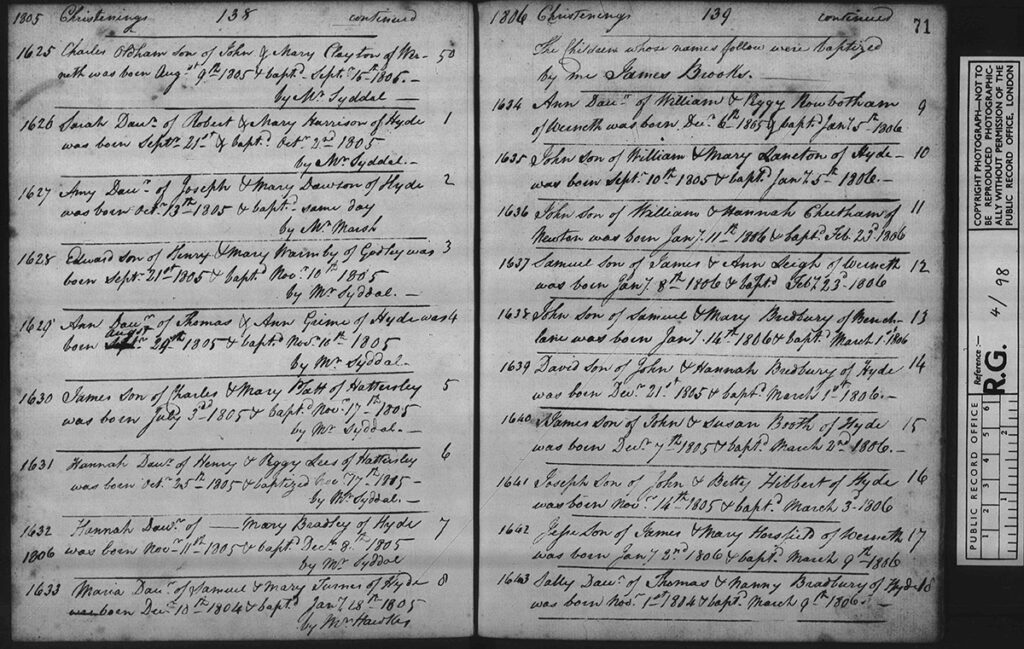
Going by the handwriting, I can’t even be sure when Rev. Cooper ceased keeping his own records. The handwriting never changed dramatically. I couldn’t even really see signs of the illness that eventually claimed Reverand Cooper’s life. Rev. Brooks continued using the same exact format as Rev. Cooper used for about 5 pages… Yep 5 pages in he made a huge change. A change that I will be forever grateful for.
Absolutely Necessary… I agree!
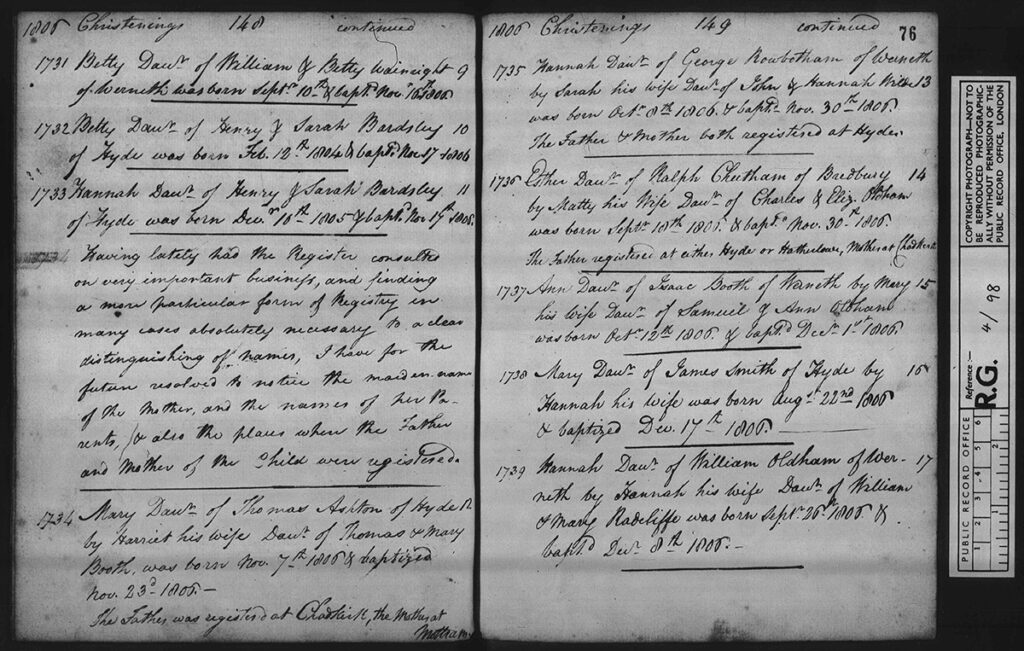
“Having lately had the Register consulted on very important business, and finding a more particular form of Registry in many cases absolutely necessary to a clear distinguishing of names, I have for the future resolved to notice the maiden name of the mother, and the names of her Parents, & also the places where the father and mother of the child were registered.”
Excuse me, I’d like all of us to take a moment and just let that sink in. He did not always record where the parents were registered but I’m not even worried about that. I’m too grateful for the wealth of information and context that we are getting just knowing the maiden name of the mother and her parents names. I don’t know what important business inspired him to make this change, but I am so thankful it did.
You might think to yourself, wait, I’ve seen English baptism records and they have those boxes to fill in. Not just a blank piece of paper.
Yeah, Rev. Brooks wasn’t a fan…
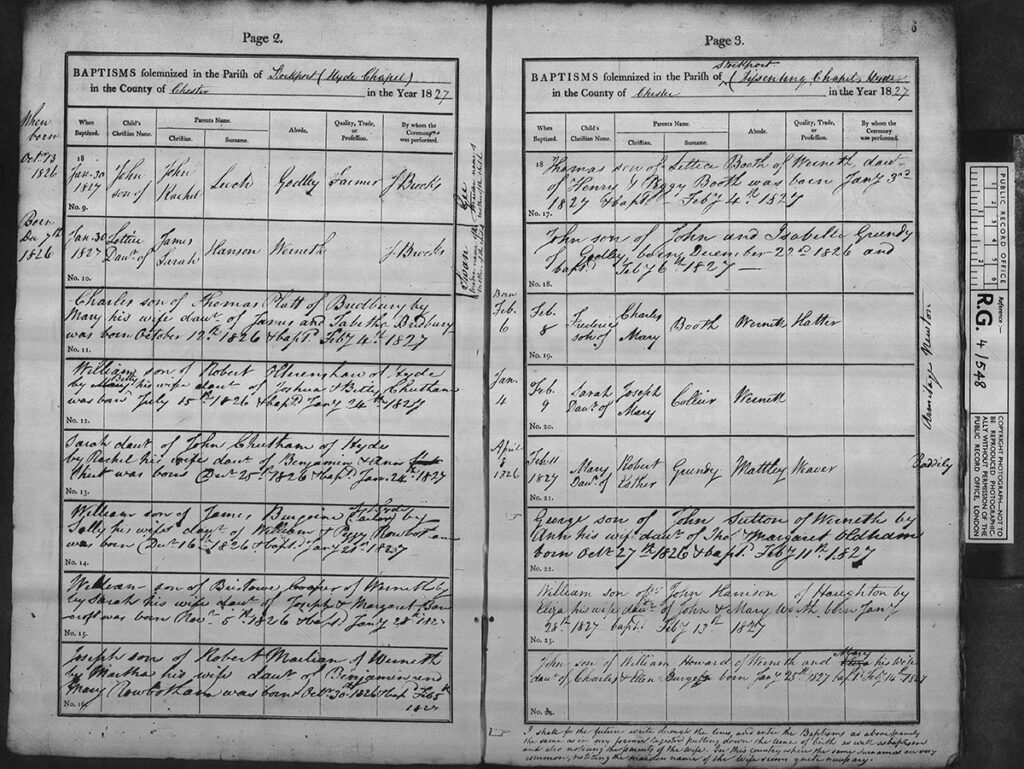
One page. He got through one page of that and decided it just wasn’t for him. If you can see on the bottom right there is a hand pointing to another note from him. Why am I falling in love with a minister who was alive in 1827. If you want to see it bigger, No worries! I have it right here.

“I shall for the future write through the lines, and enter the Baptisms as above (namely the same as in my former register) putting down the time of birth as well as baptism and also noticing the parents of the wife. In this country where the same surnames are very common, noticing the maiden name of the wife & comes quite necessary.”
I agree Reverand Brooks. I definitely agree. Me and my 5 Thomas Booths and 5 William Travis’ absolutely find it necessary as well. Reverand Brooks continues this all the way through where the FamilySearch images stop in 1838. Do you want to know why it’s not devastating to have it end in 1838? Because civil registration began in England in 1837. Which means I can use the General Register Office website for anyone born after 1837.
So if you have anyone you are researching who used Hyde Chapel then have some fun searching through Reverand Cooper and Reverand Brooks meticulous notes.
Because of him, I need to introduce you to the Friths…
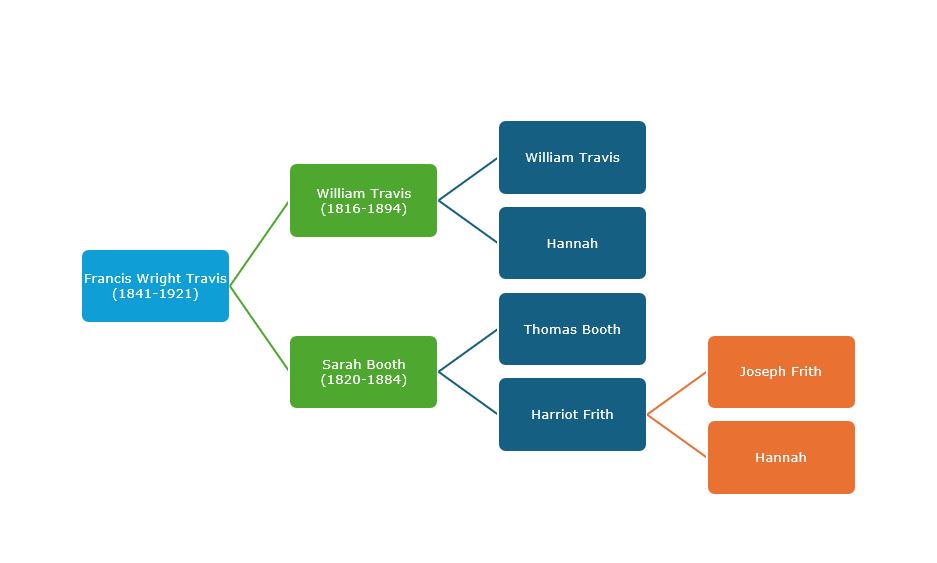
Using these records and FamilySearch’s Full Text Search, I have been able to go back another generation past Sarah Booth, to her mother Harriot Frith, daughter of Joseph Frith and his wife Hannah. Oy vey. I really have to update the blog on my research. Soon! You can bet I’m also searching through these Hyde Chapel baptisms for William Travis and Thomas Booth!